Leadership at Scale: Hearts, Trade-Offs, and the Human Future of AI
February 17, 2026
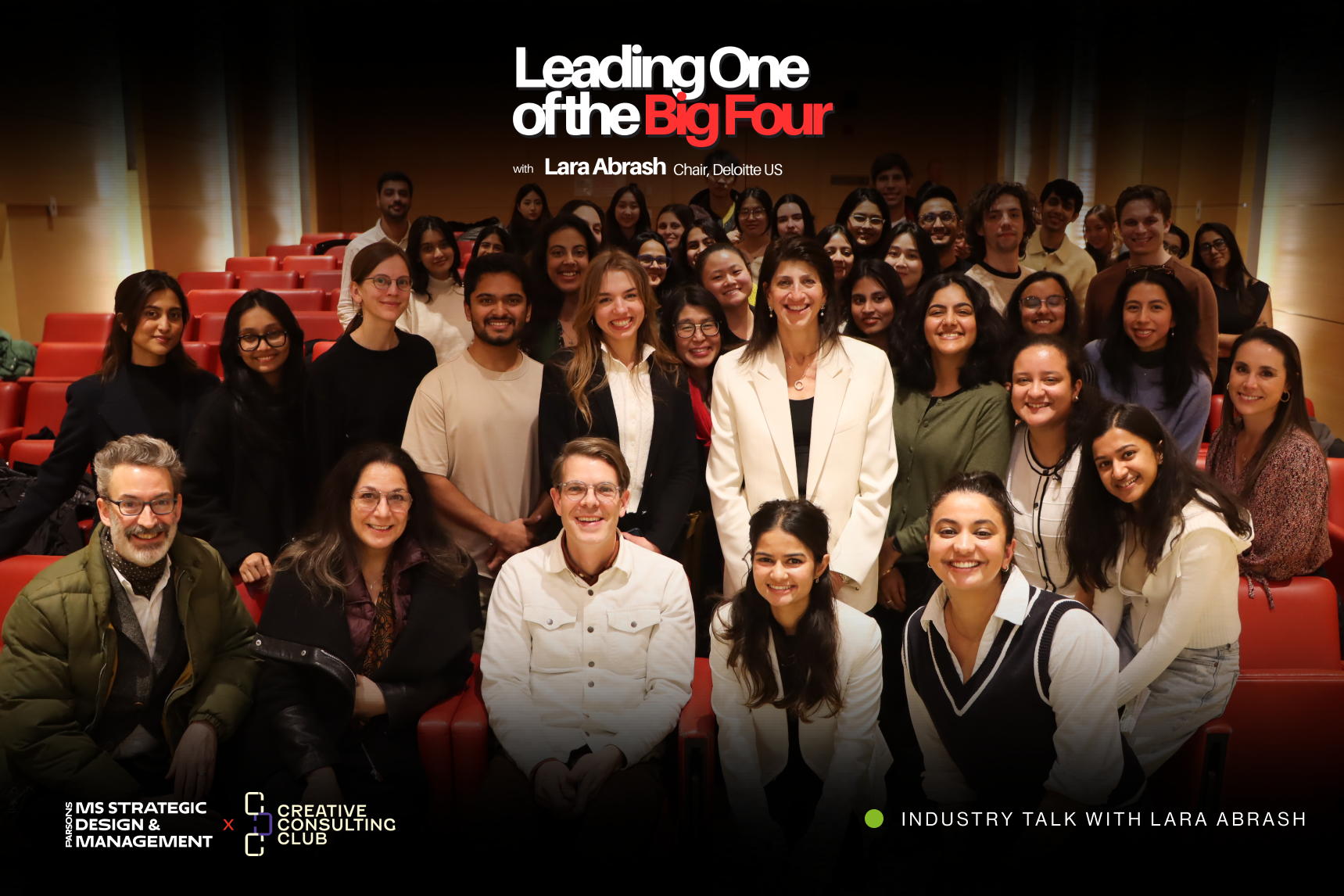
In conversation with Lara Abrash at the Parsons School of Design with Strategic Design & Management Community
Some evenings feel like programming. Others feel like perspective shifts. This one felt like the latter.
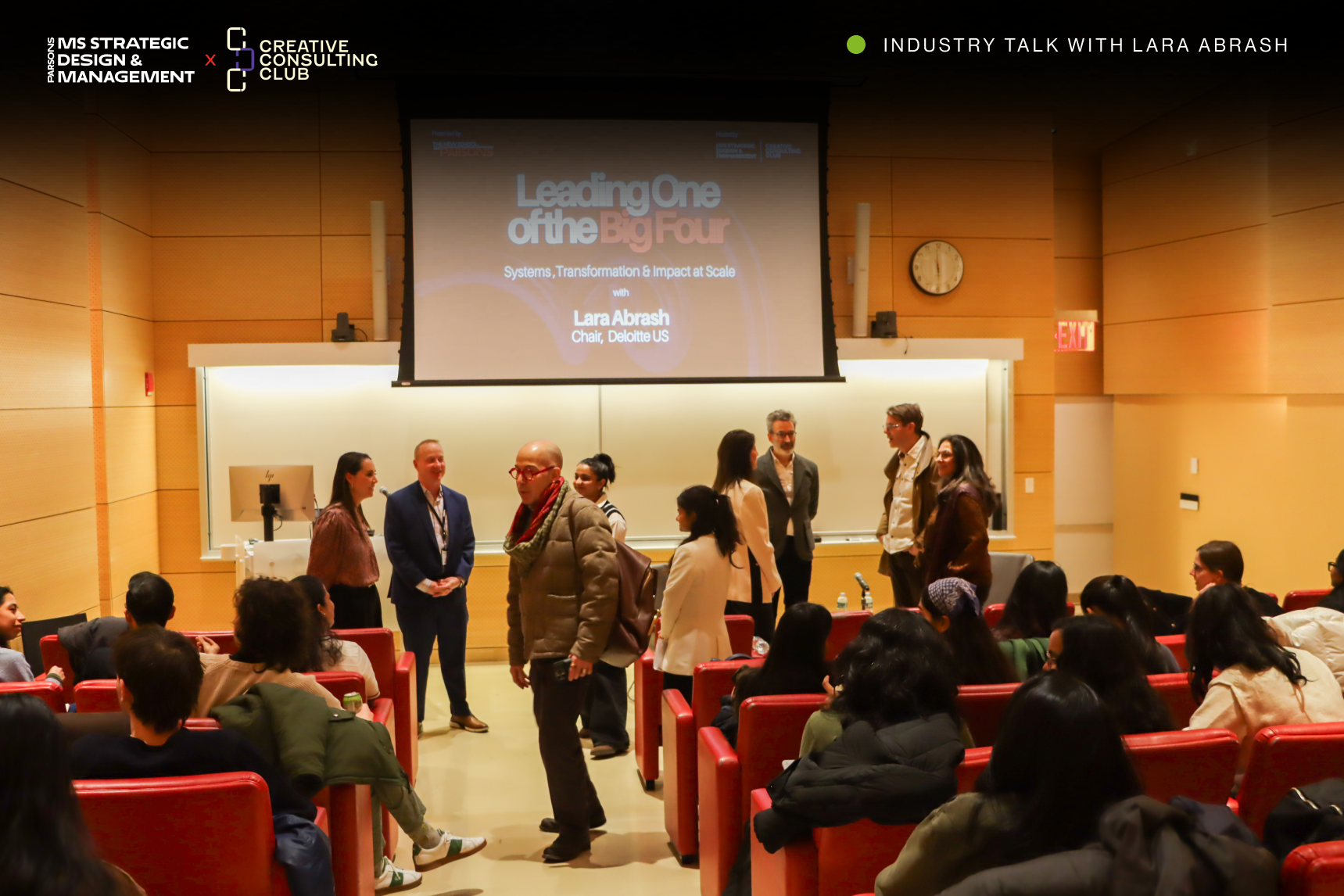
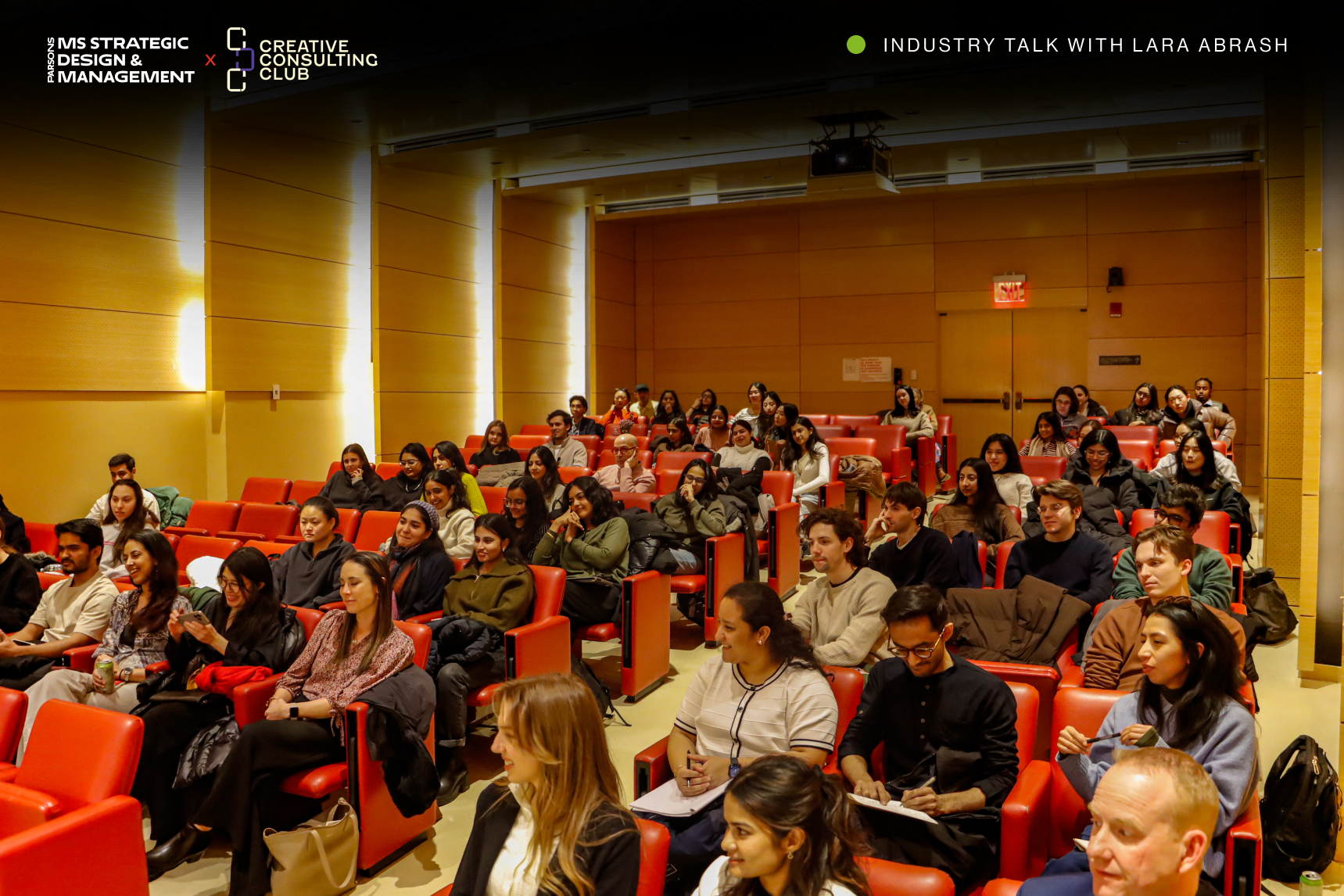
The School of Design Strategies recently welcomed Lara Abrash, Chair of Deloitte US, for a candid, in-person conversation with students from the MS Strategic Design & Management program and members of the Creative Consulting Club. What unfolded was not a rehearsed keynote or a corporate script. It was an honest exchange about leadership, reputation, innovation, AI, and the responsibility that comes with influencing systems at scale.
The conversation began not with business metrics but with life. With sports, family, and the balancing act that leadership often demands behind the scenes. It grounded the room in a simple but powerful truth: leadership does not exist in isolation from personal values and lived experience. The ability to lead institutions begins with how one navigates everyday commitments and relationships.
Leadership Is About Hearts, Not Just Heads
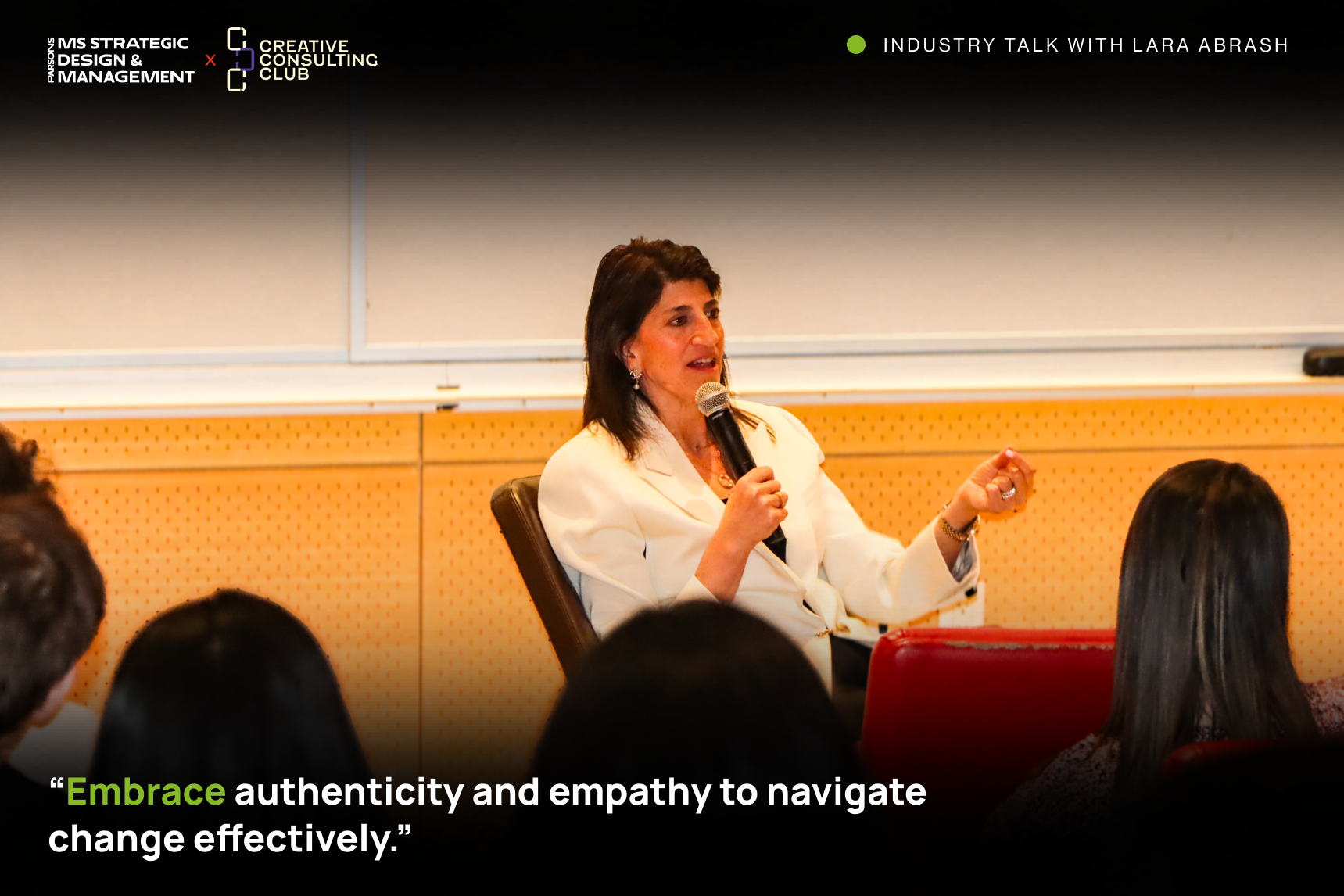
Early in the discussion, a statement reframed the entire room: leadership is about getting people’s hearts, not just their heads. In a world full of highly capable problem solvers, technical intelligence is rarely the differentiator. What distinguishes impactful leaders is their ability to connect emotionally, to inspire trust, and to move people in ways that logic alone cannot. This became especially clear in moments of uncertainty. During the pandemic, certainty was scarce. Rather than relying on polished statements, vulnerability created connection. Acknowledging shared fear and uncertainty did more to build trust than projecting unwavering control. Authenticity over perfection emerged not as branding advice but as a leadership principle.
Students were reminded that professionalism does not require detachment. In fact, trying too hard to appear buttoned up can dilute credibility. The human touch, when grounded in integrity, scales further than polished distance ever could.
Personal Brand Is Built in Small Moments
One of the strongest themes throughout the evening was how small the professional world really is. Early interactions, especially in the first job or first few roles, do not disappear with time. They follow you. A single moment of integrity or misjudgment can shape how you are remembered for years. A personal brand is not built through one defining act. It is formed through millions of small actions. Through how you respond to pressure. How you treat peers. How you handle feedback. How you show up when no one is watching. A powerful question was offered for reflection: if the door closed behind you and you were not in the room, how would you be described? Not by your title, but by your presence. By the energy you bring. By the way you engage.
For students preparing to enter competitive industries, this was a sobering yet empowering reminder. Your brand is already forming. Be intentional about it.
Evolution Never Stops
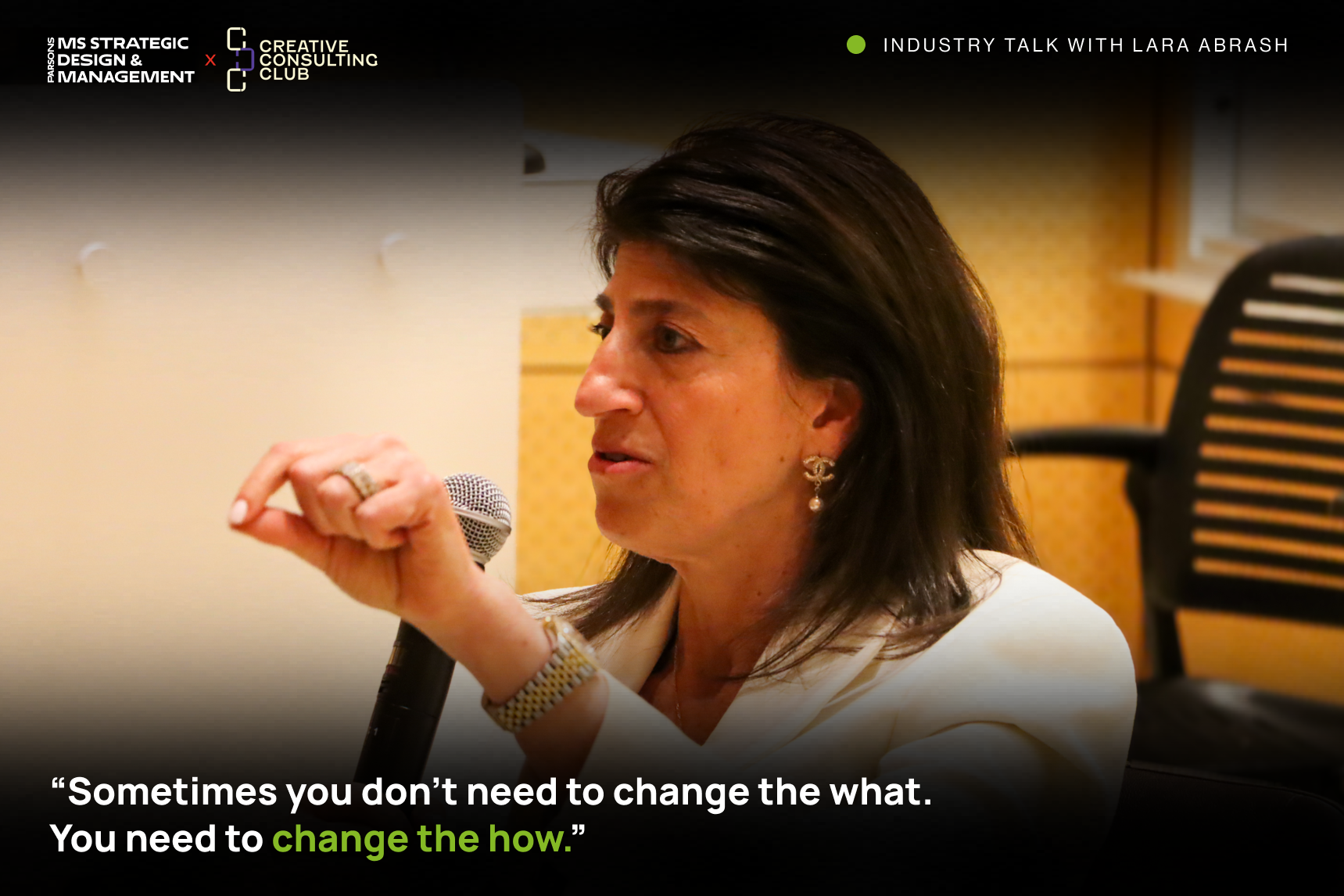
Another recurring thread was the necessity of evolution at every stage of life. Growth is not confined to early career years. It is continuous. It requires humility and a willingness to confront uncomfortable feedback. A defining example shared during the evening was a difficult 360 review that led to significant personal transformation. The insight was not about abandoning core beliefs. It was about refining the way those beliefs were expressed. Sometimes the work is not changing what you stand for. It is changing how you stand. Leadership maturity often comes from adjusting delivery, expanding perspective, and acknowledging blind spots. For a room of strategic designers trained to iterate on systems, this translated seamlessly into iterating on oneself.
Mentors and Advocates: Two Distinct Roles
Career development was framed through two essential but distinct relationships. Mentors and advocates play very different roles, yet both are critical. Mentors operate close to you. They provide guidance, perspective, and emotional support. They help you process challenges and sharpen your thinking. Advocates, on the other hand, sit in rooms where key decisions are made. They speak your name when you are not present. They influence trajectories. Both relationships require time. Neither can be transactional. Trust must be built long before it is needed. The room was reminded that advancement often depends less on self-promotion and more on credibility built quietly over time.
For students navigating early career choices, this reframed networking from extraction to investment. Relationships are not stepping stones. They are ecosystems.
Decision Making in a World of Trade-Off s
When asked about leading through uncertainty, the answer was grounded in reality rather than theory. Everything is a trade-off. The only equation in life that may feel absolute is one plus one equals two. Beyond that, leadership involves navigating competing priorities, incomplete information, and imperfect outcomes. The work is not simply choosing between options. It is understanding the implications of not choosing the alternatives. Leaders must intentionally surround themselves with people who think differently. Dissenting voices are not obstacles. They are safeguards. Decision-making may take longer when perspectives are diverse, but the outcomes are stronger. Leaders must also build sensing mechanisms to monitor assumptions and adjust when reality shifts. Agility, therefore, is not about reacting impulsively. It is about adapting thoughtfully in complex systems.
AI Beyond the Hype
The conversation inevitably turned toward AI, but in a manner grounded in practice rather than speculation. After years of hype cycles, real use cases are now emerging. At the same time, organizations are discovering that AI implementation costs more than anticipated, not only financially but also structurally. The deeper question became one of value. What does “value” truly mean? It can mean speed. It can mean quality. It can mean measurable return. Yet none of these matter without trust. AI systems reflect historical data. If that data contains bias, outcomes will mirror it. Ethical AI governance cannot be an afterthought. It must include diverse representation and involve those impacted by decisions. Unsafe outcomes are unacceptable. The framing of technology as tech-enabled and human-powered resonated strongly. Workforce planning matters. Alignment matters. Jobs are not merely economic units; they are sources of meaning and identity. Automation decisions are, ultimately, human decisions. Innovation also requires room for failure. If you have never failed, you may not have pushed boundaries far enough. Leaders must be willing to create space for experimentation while maintaining accountability for impact.
Advice to the Next Generation
As the conversation turned toward students, the guidance was clear and practical. Agility emerged as the defining skill for the next generation. The ability to navigate change, to sense uncertainty, and to adapt without losing grounding is essential. Students were encouraged to accept that not everyone will be satisfied with every decision. Leadership is about stewardship, not universal approval. It requires being comfortable in your choices and understanding what energizes you versus what drains you. Ambition was encouraged, but with emotional intelligence. Communication skills, courage to call things out respectfully, ethical judgment, and genuine curiosity were described as non-negotiable traits. Most importantly, students were reminded that they have agency. Every career decision is a choice. Grounding oneself in purpose matters more than chasing titles.
A Room Rooted in Reflection
As strategic design students entering an AI-driven economy, the conversation resonated on multiple levels. We are trained to think in systems, to navigate complexity, to build sensing mechanisms, and to prototype and iterate. Yet the evening reinforced something more foundational than any framework.
Technology will continue to evolve. Markets will shift. Tools will advance and change. But leadership remains fundamentally human. It is about trust built over time and reputation shaped by daily actions. It is about chemistry within teams and the discipline of walking the walk. It is about pairing innovation with empathy, balancing speed with responsibility, and recognizing that every system is ultimately made up of people. It is about building trust before influence and understanding that your reputation often travels faster than your intentions. The room did not leave with a checklist of tactics. It left with a deeper orientation. Leadership is stewardship. Innovation requires courage. Trust compounds. Humans matter.
The future will not be defined by technology alone, but by how we choose to lead with it. And in a world accelerating toward automation, that human dimension may be the most strategic advantage of all.